

Cybersecurity Solutions for Small Business: A Complete Guide
Understanding Cybersecurity for Small Businesses
Cybersecurity is no longer a concern limited to large corporations. Small businesses are increasingly targeted by cybercriminals because they often handle valuable customer information, financial data, employee records and business systems.
Implementing the right cybersecurity solutions for small business can help protect sensitive information, reduce security risks and keep business operations running smoothly. From secure networks and endpoint protection to employee awareness and data backups, a strong cybersecurity strategy should cover multiple areas.
This guide explains the most important small business cybersecurity solutions, how they work and how businesses can choose the right approach for their needs.
What Are Cybersecurity Solutions for Small Business?
Cybersecurity solutions for small business are technologies, processes and security practices designed to protect a company's systems, networks, applications, devices and data from cyber threats.
These solutions can include:
Network security
Endpoint protection
Firewall configuration
Secure cloud infrastructure
Data encryption
Multi-factor authentication
Backup and recovery
Security monitoring
Employee security training
Vulnerability assessments
Access control
Unlike a single security product, effective cybersecurity combines multiple layers of protection. Each layer addresses a different part of the business's digital environment.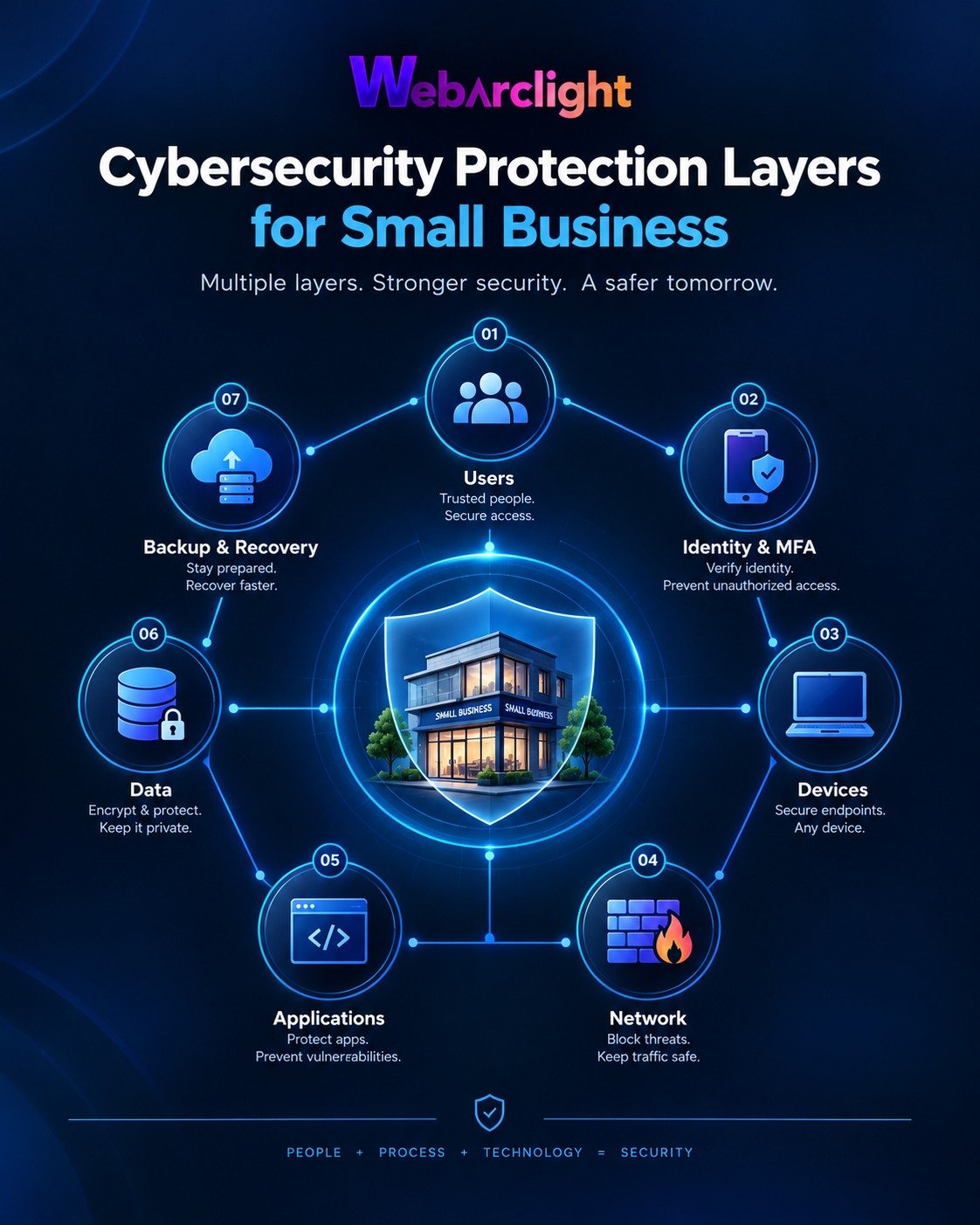
Why Small Businesses Need Cybersecurity
Small businesses may assume that cybercriminals mainly target large organizations. However, attackers can also target smaller companies because they may have valuable data but limited security resources.
A security incident can result in:
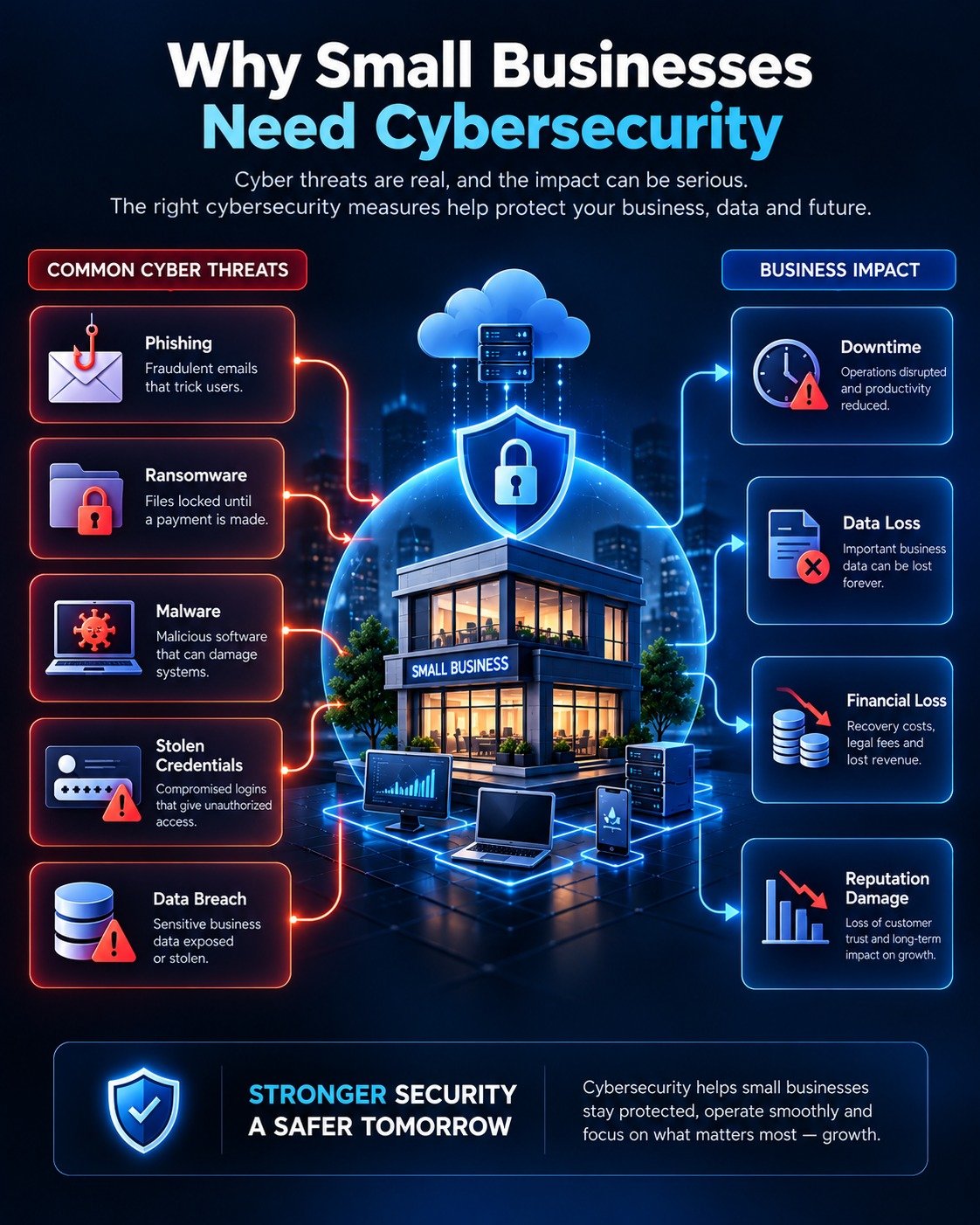
Loss of sensitive business data
Financial losses
Operational downtime
Customer trust issues
Unauthorized access to business accounts
Damage to business reputation
Recovery and remediation costs
Common threats include phishing attacks, ransomware, malware, stolen credentials, malicious software and unauthorized access to business systems.
For this reason, cybersecurity services for small business should be considered part of normal business infrastructure rather than an optional technology investment.
Key Benefits of Cybersecurity Solutions for Small Business
Better Data Protection
Businesses handle information such as customer details, employee records, financial information and internal documents. Security controls can help prevent unauthorized access to this data.
Encryption, access controls, secure storage and regular backups can provide additional layers of protection.
Improved Network Security
A secure business network helps control who and what can access company resources.
Firewalls, secure Wi-Fi configurations, network segmentation, VPNs and monitoring can reduce the risk of unauthorized network access.
Protection Against Malware and Ransomware
Malware and ransomware can disrupt business operations and potentially make important files inaccessible.
Endpoint protection, security updates, email security, access controls and reliable backups can help businesses reduce the impact of these threats.
Secure Remote Work
Many small businesses have employees working remotely or accessing company systems from different locations.
Secure remote access, multi-factor authentication, device security and appropriate access permissions can help protect business systems outside the traditional office environment.
Reduced Business Risk
Cybersecurity cannot eliminate every possible threat, but a layered security strategy can reduce exposure and improve an organization's ability to detect, respond to and recover from incidents.
Small Business Cybersecurity Solutions vs Basic Security Measures
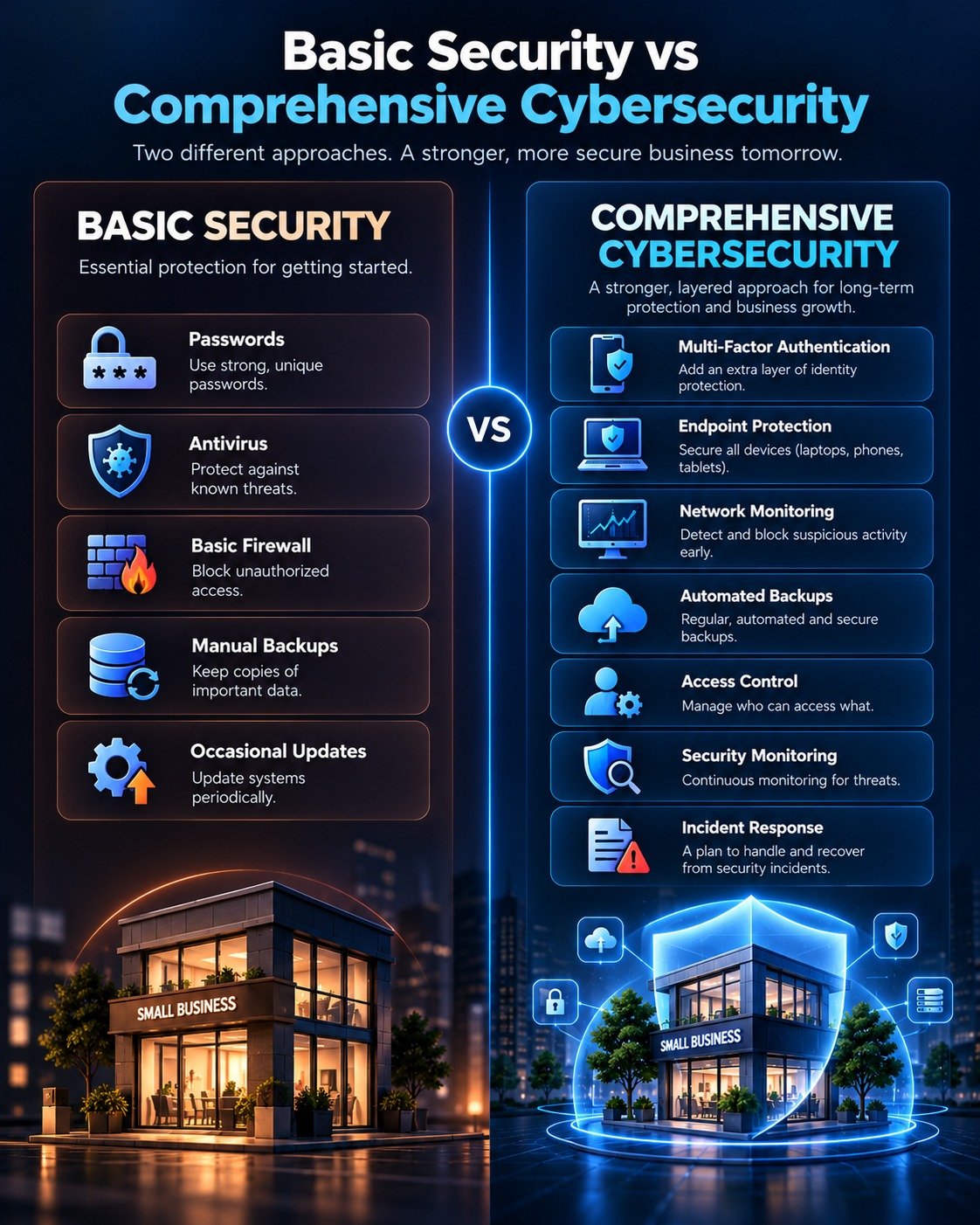
Basic security practices such as using antivirus software and strong passwords are important, but they may not be enough on their own.
| Basic Security Measures | Comprehensive Cybersecurity Solutions |
|---|---|
| Antivirus software | Endpoint security and monitoring |
| Passwords | Password management + MFA |
| Basic firewall | Managed network security |
| Manual backups | Automated backup and recovery |
| Occasional updates | Continuous patch management |
| Basic email filtering | Advanced email security |
| Individual security practices | Organization-wide security policies |
| Reactive approach | Proactive monitoring and assessment |
A comprehensive approach combines technology, processes, monitoring and employee awareness.
How Cybersecurity for Small Business Works
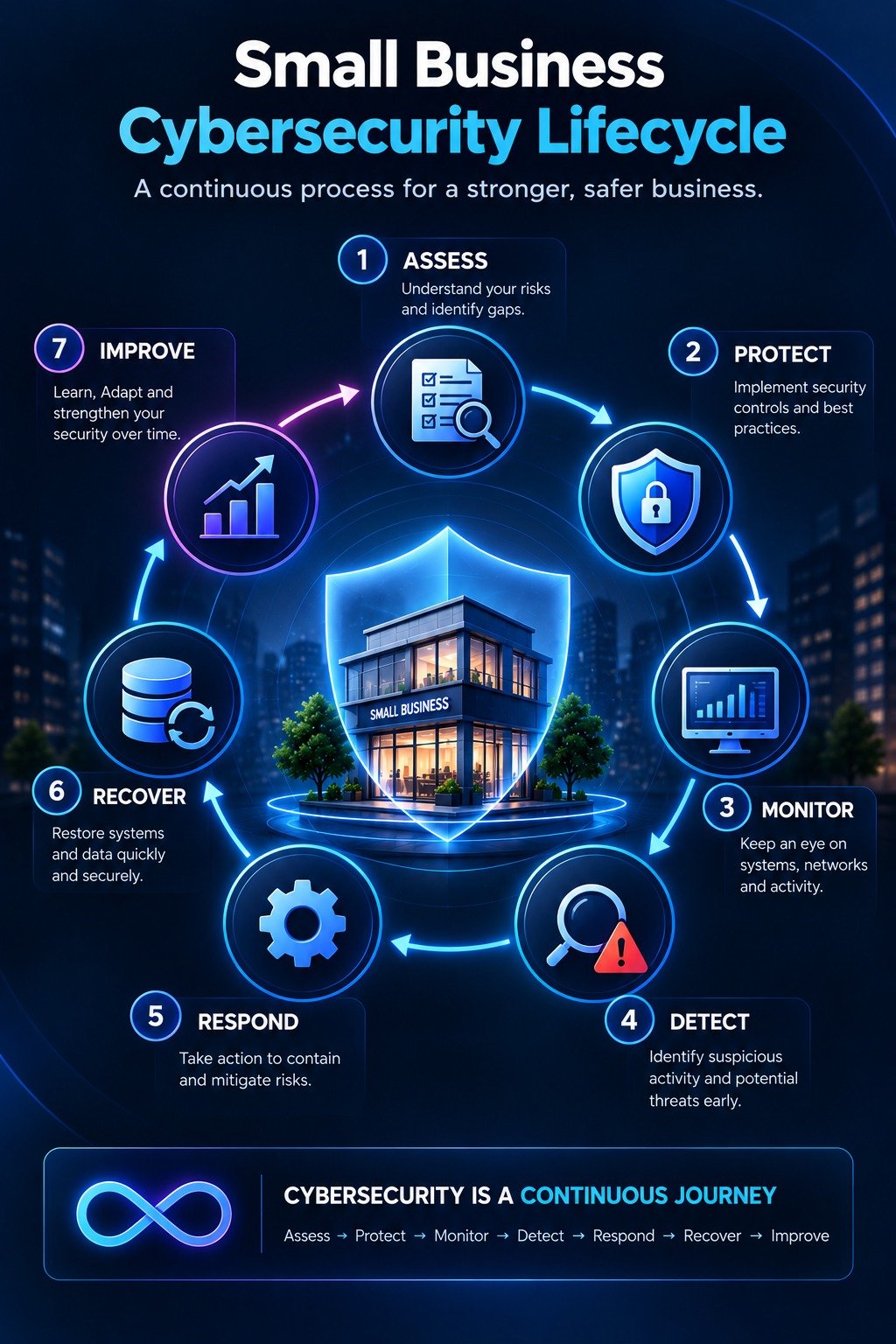
A strong cybersecurity strategy usually consists of several stages.
Security Assessment
The first step is understanding the current security environment.
A business can identify:
Critical systems
Sensitive information
Connected devices
Existing security controls
Vulnerabilities
User access levels
Potential attack surfaces
This provides a foundation for developing a security strategy.
Network and Endpoint Protection
Business computers, laptops, servers, mobile devices and network infrastructure should be protected against unauthorized access and malicious activity.
Endpoint security and network security solutions can help monitor and protect these systems.
Identity and Access Management
Not every employee needs access to every business system.
Businesses can use role-based access, strong authentication, multi-factor authentication and least-privilege principles to limit unnecessary access.
Data Backup and Recovery
Backups are an important part of business continuity.
Important business data should be backed up regularly and stored in a secure environment. Businesses should also periodically test whether their backups can actually be restored.
Monitoring and Incident Response
Security monitoring can help identify unusual activity and potential threats.
When an incident occurs, having an incident response plan can help the business determine what happened, contain the problem, recover systems and reduce the possibility of similar incidents occurring again.
Cloud Cybersecurity for Small Businesses
Cloud platforms can provide flexibility and scalability, but moving systems to the cloud does not automatically make them secure.
Cloud cybersecurity for small business can include:
Identity and access management
Secure cloud configurations
Encryption
Access monitoring
Backup strategies
Network security
Logging and monitoring
Regular security assessments
Businesses using platforms such as AWS or other cloud environments should ensure that cloud resources are configured according to their security requirements.
Cloud security should also be considered alongside the security of devices, applications, users and business data.
How to Choose a Cybersecurity Company
Choosing the right cybersecurity company can be important for small businesses that do not have a dedicated internal security team.
Before selecting a provider, consider:
Experience
Look for a provider that understands the security requirements of small and growing businesses.
Range of Services
A provider should be able to address multiple areas of security rather than focusing on only one product.
Potential services include:
Security assessments
Network security
Endpoint protection
Cloud security
Vulnerability management
Backup and disaster recovery
Security monitoring
Incident response
Security consulting
Scalability
Your security requirements may change as your business grows. Choose solutions that can scale with additional employees, devices, applications, locations and cloud resources.
Proactive Security Approach
A good security strategy should not only react to incidents. Regular assessments, monitoring, updates and vulnerability management can help identify risks before they become serious problems.
Clear Communication
Cybersecurity can be technical, but your security provider should be able to explain risks, recommendations and priorities in clear business language.
How Much Do Cybersecurity Solutions for Small Business Cost?
The cost of cybersecurity solutions for small business depends on several factors, including:
Number of employees
Number of devices
Network complexity
Cloud infrastructure
Required security services
Compliance requirements
Monitoring requirements
Backup and recovery requirements
Existing security infrastructure
A small business with a few employees may need a relatively simple security setup, while a growing organization handling sensitive customer information may require more advanced monitoring, access management, cloud security and incident response capabilities.
Instead of choosing security solutions based only on price, businesses should evaluate the potential cost of downtime, data loss, fraud and reputational damage.
Frequently Asked Questions
What are the most important cybersecurity solutions for a small business?
Important solutions can include multi-factor authentication, endpoint protection, firewall and network security, secure backups, access control, software updates, email security, employee awareness training and security monitoring.
Does a small business really need cybersecurity?
Yes. Small businesses can hold valuable customer, financial, employee and operational information. Basic cybersecurity measures can significantly improve protection against common threats.
Is antivirus software enough for a small business?
Antivirus software is useful, but it should not be considered a complete cybersecurity strategy. Businesses generally need multiple layers of protection covering identities, networks, endpoints, data, applications, backups and users.
How can small businesses protect themselves from ransomware?
Businesses can reduce ransomware risk through strong access controls, multi-factor authentication, security updates, endpoint protection, employee awareness, network security and regularly tested backups.
Should a small business use cloud cybersecurity?
Businesses using cloud applications or infrastructure should consider cloud security as part of their overall cybersecurity strategy. Proper identity management, configuration, monitoring, encryption and backup practices are particularly important.
Can a small business outsource cybersecurity?
Yes. Businesses without an internal security team can work with a cybersecurity provider or managed security service provider to handle selected security activities.
Conclusion
Cybersecurity is an essential part of running a modern business. Small businesses do not necessarily need the same security infrastructure as large enterprises, but they do need a security strategy that matches their systems, data, employees and risk level.
The right cybersecurity solutions for small business can help protect business data, secure networks and devices, support remote work, reduce operational risks and improve resilience against cyber threats.
Businesses can start by assessing their current environment, identifying their most important assets, strengthening access controls, securing endpoints and networks, implementing reliable backups and establishing a plan for monitoring and responding to security incidents.
As your business grows, your cybersecurity strategy should grow with it.
Protect Your Business With the Right Cybersecurity Strategy
WebArclight (https://webarclight.com/) helps businesses strengthen their digital infrastructure with cybersecurity, cloud, DevOps, software development and IT consulting solutions tailored to their business requirements.
Whether you are improving an existing infrastructure or building a secure digital environment from the ground up, the right technology and security strategy can help your business operate with greater confidence.
Contact WebArclight (https://webarclight.com/) to discuss your business's cybersecurity and IT requirements.
Comments
No Comments Yet
Be the first to share your thoughts!