

Why Choosing the Right Web Development Company Matters
A business website is more than just an online presence. It can be one of your most important tools for attracting customers, generating leads, building trust, and supporting long-term business growth.
However, creating an effective website requires more than an attractive design. The right web development company should understand your business goals, target audience, technology requirements, SEO needs, security, performance, and future growth.
With many website development companies and agencies available, choosing the right partner can be challenging. Comparing portfolios, technical expertise, pricing, communication, and post-launch support can help you make a better decision.
This guide explains what to look for when choosing a web development company and how to avoid common mistakes before starting your project.
What Does a Web Development Company Do?
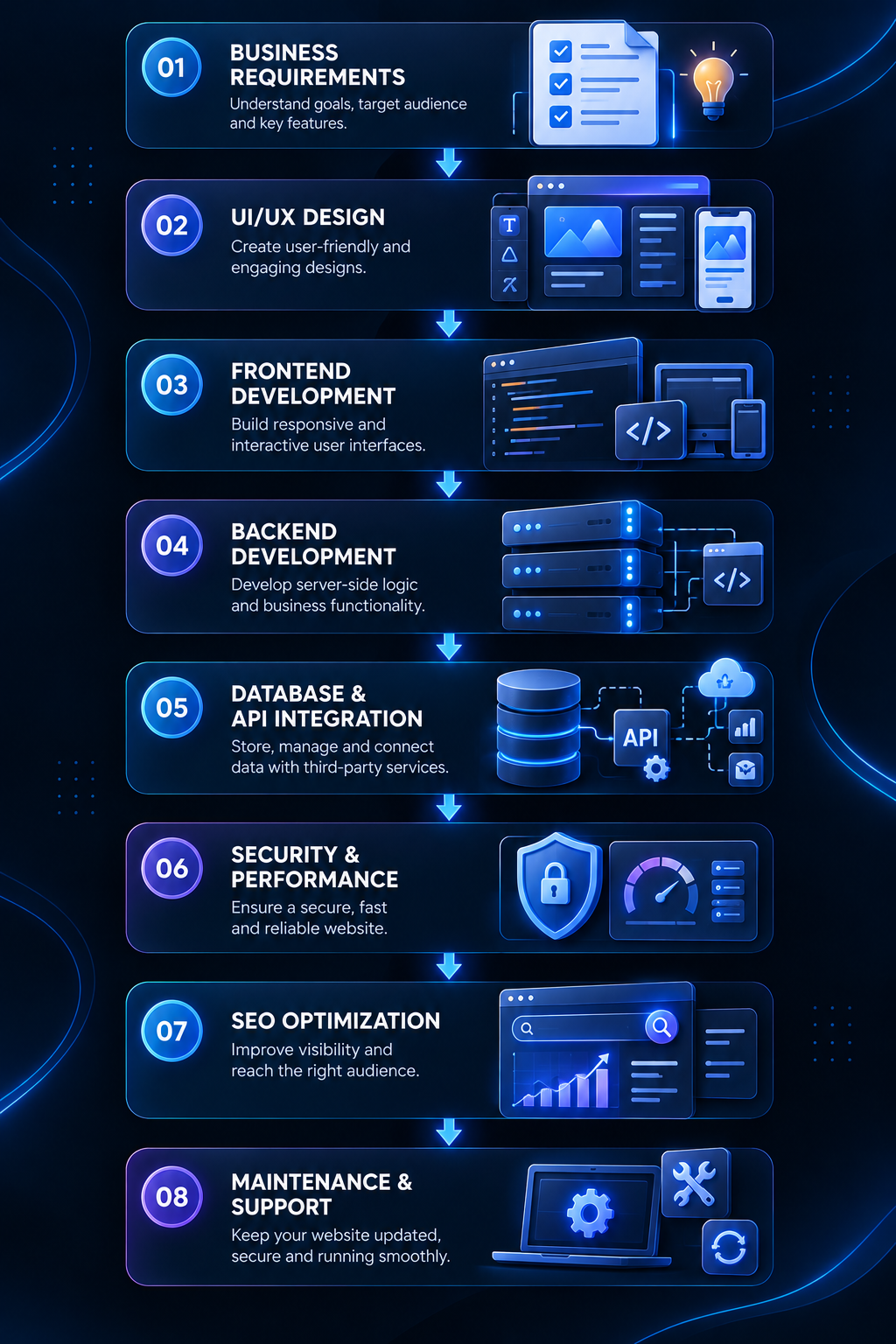
A web development company designs, develops, tests, launches, and maintains websites or web applications for businesses.
Depending on its expertise, a company may provide services such as:
Business website development
Custom web development
E-commerce development
Frontend and backend development
Content management systems
API integration
Database development
Website security
Website performance optimization
SEO-friendly development
Website maintenance and support
A professional website development company should focus not only on how a website looks but also on how it performs, functions, scales, and supports your business objectives.
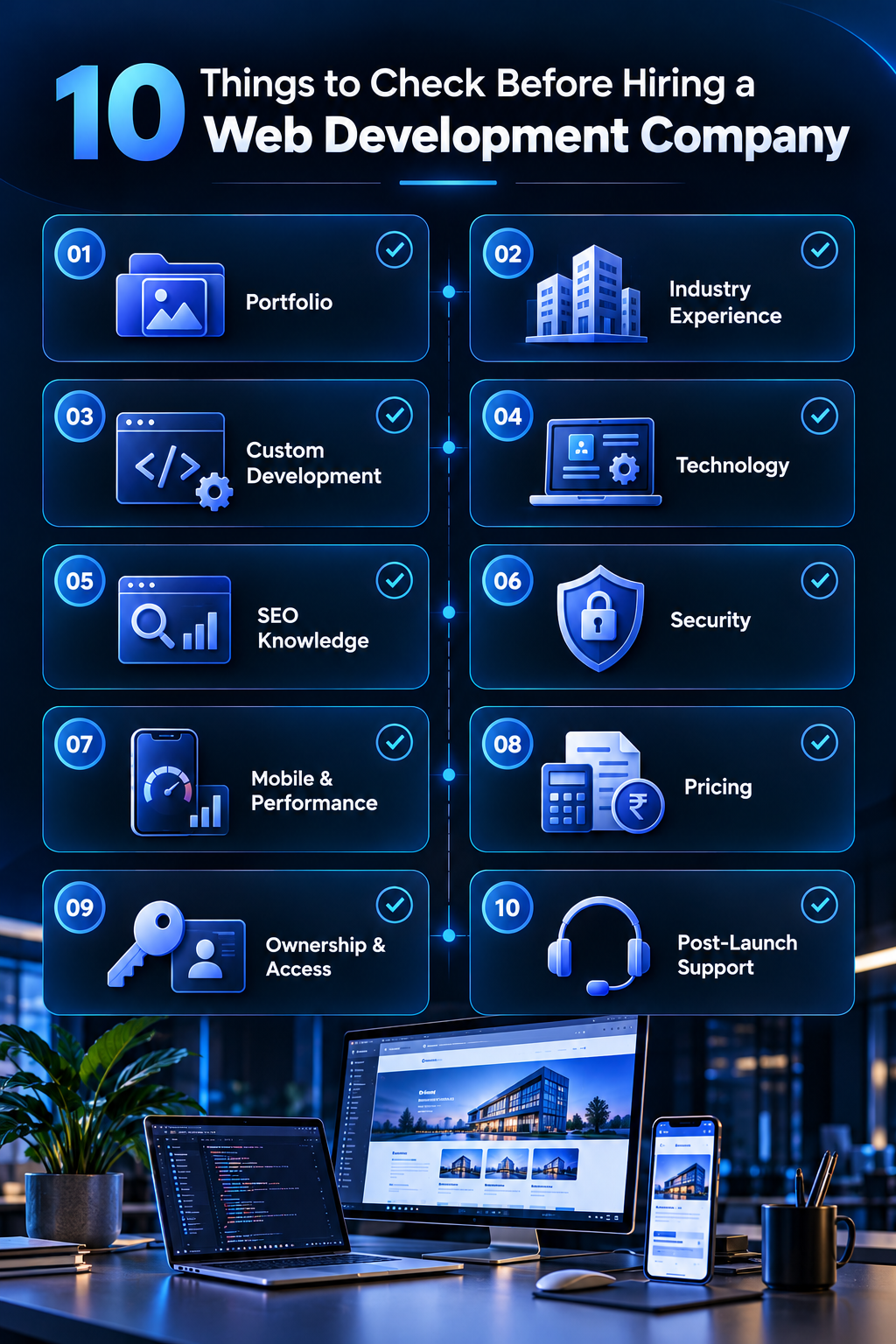
10 Things to Check Before Hiring a Web Development Company
Choosing a development partner requires more than comparing prices. Consider these important factors before making a decision.
1. Review Their Portfolio
Start by examining the company's previous projects.
Look for websites that demonstrate:
Professional design
Mobile responsiveness
Fast loading times
Clear navigation
Good user experience
Industry relevance
Functional features
A portfolio can help you understand whether the company has experience creating websites similar to what your business needs.
2. Check Their Industry Experience
Experience in your industry can be useful because the development team may already understand your customers, competitors, and common business requirements.
However, industry experience should not be the only factor. A strong web development agency should also demonstrate the ability to understand a new business and develop a solution around its specific requirements.
3. Understand Their Custom Development Capabilities
Not every business needs the same website.
Some businesses may need a simple corporate website, while others may require:
Customer portals
Booking systems
E-commerce functionality
Dashboards
Payment integration
CRM integration
APIs
Custom business applications
If your requirements are unique, choose a custom web development company that can build functionality specifically for your business instead of relying entirely on pre-built templates.
4. Ask About Their Technology and Development Process
Ask what technologies the company uses and why they recommend them.
Depending on your project, technologies may include modern frontend frameworks, backend platforms, databases, cloud infrastructure, APIs, and content management systems.
A professional development company should be able to explain its technology choices in simple terms and show how those technologies support your project requirements.
5. Make Sure They Understand SEO
Website development and SEO should work together.
A technically well-built website should support:
Search engine crawlability
Fast loading
Mobile responsiveness
Clean URLs
Proper heading structure
Metadata
Structured data where appropriate
Internal linking
Image optimization
Core Web Vitals
Choosing a company that understands SEO-friendly web development can make it easier to build organic search visibility after launch.
6. Check Website Security Practices
Security should be considered from the beginning of development.
Ask potential development companies about:
HTTPS implementation
Secure authentication
Access control
Data protection
Software updates
Backup strategies
Form and API security
Vulnerability management
A website that looks professional but has weak security can create unnecessary business risks.
7. Test Their Mobile and Performance Approach
A large portion of website visitors may access your website through mobile devices.
Your website should therefore provide a consistent experience across:
Smartphones
Tablets
Laptops
Desktop computers
Performance is also important. Large images, unnecessary scripts, poor hosting, and inefficient code can make a website slow.
Ask the development company how it approaches responsive design and website performance optimization.
8. Understand Pricing and Project Scope
Do not choose a company solely because it offers the lowest price.
Before starting a project, make sure you understand:
Development cost
Design cost
Hosting requirements
Domain requirements
Third-party software costs
Maintenance fees
Additional feature costs
Estimated timeline
A clear project scope can help prevent unexpected costs later.
9. Confirm Ownership and Access
This is often overlooked when hiring a development company.
Make sure you understand who owns:
Website source code
Domain
Hosting account
Database
Design assets
Business email accounts
Analytics accounts
Search Console
Other third-party services
Your business should maintain appropriate access to important digital assets.
10. Check Post-Launch Support
Website development does not necessarily end when the website goes live.
You may need support for:
Bug fixes
Security updates
Performance improvements
Content changes
New features
Backups
Technical troubleshooting
A company offering reliable website development services should clearly explain what support is available after launch.
Web Development Company vs Freelancer: Which Is Better?
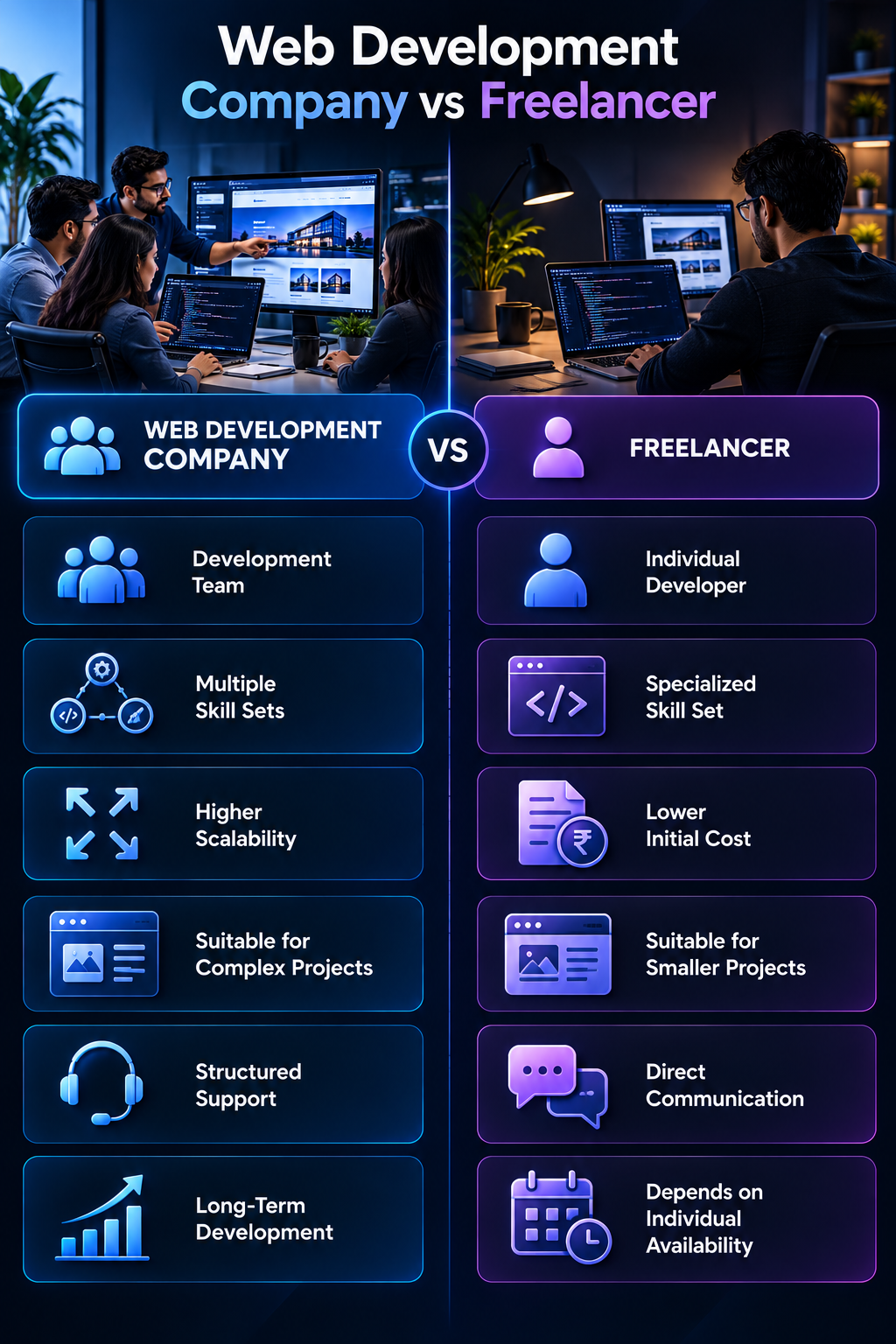
Both web development companies and freelancers can be suitable depending on the project.
| Factor | Web Development Company | Freelancer |
|---|---|---|
| Team size | Usually a team | Usually one person |
| Large projects | Often suitable | May have limitations |
| Multiple specialties | Usually available | Depends on individual |
| Communication | Structured | Often direct |
| Scalability | Generally higher | May be limited |
| Long-term support | Usually available | Depends on agreement |
| Cost | Often higher | Often lower |
| Complex integrations | Usually better suited | Depends on expertise |
For a small website with limited requirements, a freelancer may be sufficient. For a complex website, web application, e-commerce platform, or long-term digital project, a professional development team may provide greater resources and scalability.
How Much Does Web Development Cost?
The cost of website development varies significantly depending on the project's requirements.
Factors that influence pricing include:
Number of pages
Design complexity
Custom functionality
E-commerce requirements
API integrations
Content management system
Database requirements
Security requirements
Hosting infrastructure
SEO requirements
Maintenance and support
A simple business website may require a much smaller budget than a custom web application with user accounts, dashboards, payment processing, and third-party integrations.
Instead of asking only, “How much does a website cost?”, ask what is included in the project and what long-term value the website is expected to provide.
Red Flags to Avoid When Choosing a Web Development Company
Some warning signs should make you reconsider a potential development partner.
Extremely Low Pricing
An unusually low quote may mean important services, security measures, testing, or support are excluded.
No Relevant Portfolio
If a company cannot demonstrate previous work, it becomes harder to evaluate its capabilities.
No Clear Project Scope
A professional project should have clear deliverables, timelines, responsibilities, and costs.
Poor Communication
Delayed responses, unclear explanations, and inconsistent communication can create problems during development.
No Ownership Clarity
Avoid situations where you do not have appropriate access to your website, domain, hosting, or other important assets.
No Post-Launch Plan
A website may require updates and maintenance after launch. Make sure you understand who will handle them.
Questions to Ask Before Hiring a Web Development Company
Before signing an agreement, consider asking:
Have you built websites similar to ours?
Can we see examples of your previous work?
What technology do you recommend for our project?
Is the website custom-built or template-based?
Will the website be mobile responsive?
How will SEO be handled during development?
What security measures will be implemented?
Who owns the website and source code?
Will we have access to hosting and analytics accounts?
What happens after the website launches?
What is included in the quoted price?
How will additional features or changes be charged?
The answers can help you compare different web development companies more effectively.
How WebArclight Can Help
Choosing a development partner is ultimately about finding a team that understands both technology and business objectives.
WebArclight provides digital solutions designed around business requirements, including website development, custom software development, SEO, cloud solutions, DevOps, and IT services.
Our approach focuses on creating websites that are:
Business-focused
Responsive
SEO-friendly
Performance-oriented
Secure
Scalable
Designed around user experience
Whether you need a new business website, a custom web application, or improvements to an existing website, choosing the right technical approach can help create a stronger digital foundation for your business.
Frequently Asked Questions
What should I look for in a web development company?
Look at its portfolio, technical expertise, communication, development process, SEO knowledge, security practices, pricing transparency, ownership policies, and post-launch support.
How do I choose a website development company?
Start by defining your business requirements, then compare several companies based on relevant experience, portfolio quality, technology, pricing, communication, and support.
Is a web development company better than a freelancer?
It depends on the project. Freelancers can be suitable for smaller projects, while a development company may be more appropriate for complex websites, web applications, integrations, and long-term projects.
How much does it cost to hire a web development company?
There is no fixed price. Cost depends on the website's size, design, functionality, integrations, technology, security, and ongoing support requirements.
How long does website development take?
A simple business website may take several weeks, while complex websites and web applications can take considerably longer. The timeline depends on requirements, content availability, design, development, testing, and revisions.
Should SEO be considered during website development?
Yes. SEO should be considered during development because technical structure, performance, mobile responsiveness, URLs, metadata, navigation, and crawlability can affect search visibility.
Conclusion
Choosing the right web development company is an important business decision. The cheapest option is not always the best option, and an attractive portfolio alone does not guarantee a successful project.
Evaluate the company's experience, technology, development process, SEO capabilities, security practices, pricing, ownership policies, and long-term support before making your decision.
A good development partner should do more than build a website. It should create a digital platform that supports your business goals, provides a good user experience, and can grow with your business.
Build a Website That Supports Your Business Growth
Looking for professional web development services for your business?
Talk to WebArclight (https://webarclight.com/) about your next website or web development project.
Comments
No Comments Yet
Be the first to share your thoughts!