

Why Website Development Cost Varies
A professional website is an important investment for businesses of all sizes. Whether you need a simple business website, an e-commerce store, or a custom web application, the total cost can vary significantly depending on your requirements.
There is no single price for website development. Design complexity, functionality, technology, integrations, security, SEO, hosting, and ongoing maintenance can all affect the final cost.
Understanding these factors can help you set a realistic budget, compare development companies, and avoid unexpected expenses.
How Much Does It Cost to Build a Website?
The cost of building a website depends primarily on what the website needs to accomplish.
A basic business website with a few pages and standard functionality will generally require less development work than an e-commerce platform with product management, payments, customer accounts, and third-party integrations.
Similarly, a custom web application with dashboards, databases, APIs, authentication, and advanced business functionality will require more planning and development.
Instead of focusing only on the initial price, businesses should consider:
Website functionality
Design requirements
Development complexity
Number of pages
Third-party integrations
Security requirements
SEO requirements
Hosting
Maintenance
Future scalability
A clear project scope is one of the best ways to get a more accurate website development estimate.
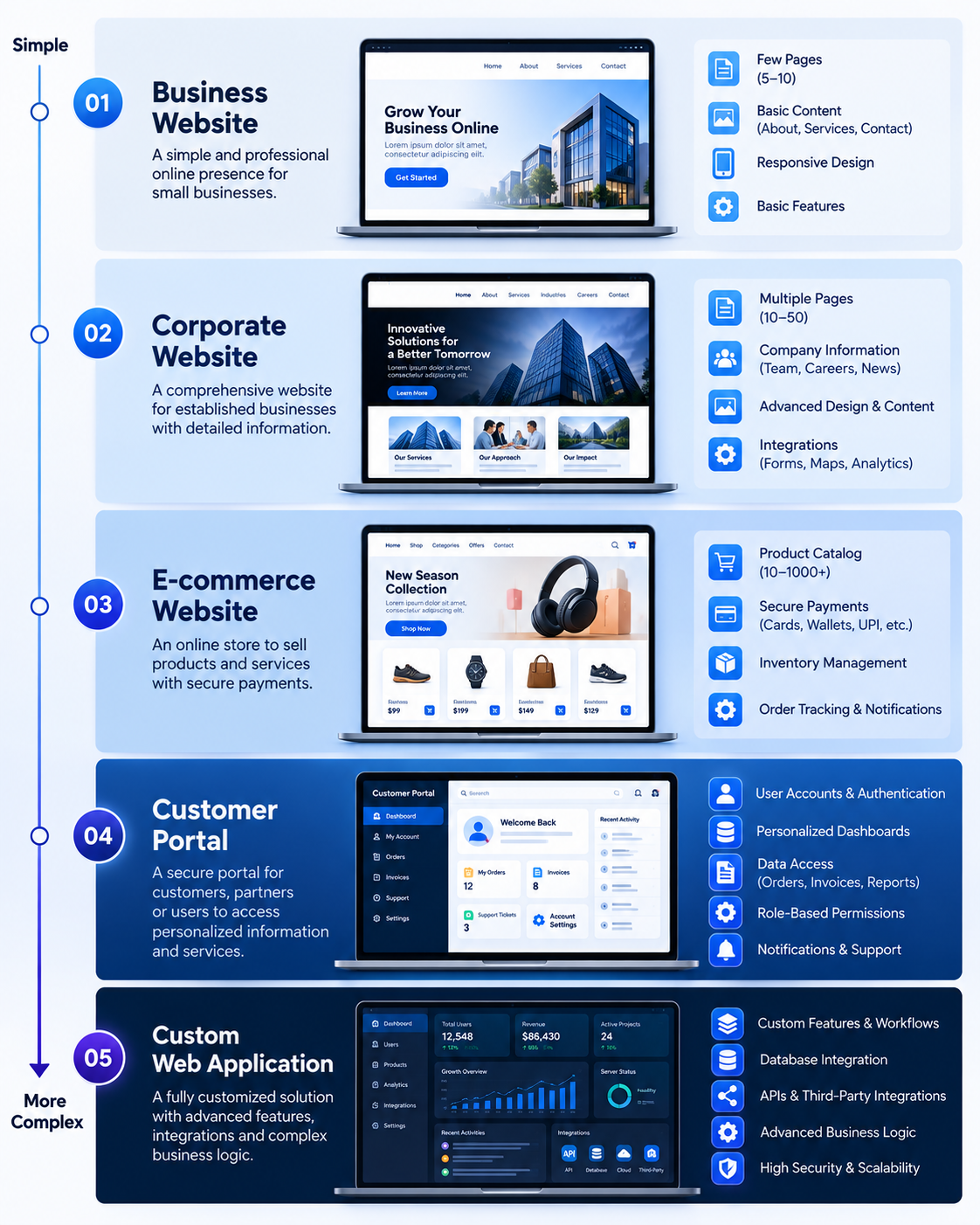
Website Development Cost by Website Type
Different types of websites require different levels of design and development.
Business Website
A business website typically introduces a company, its services, products, team, and contact information.
Common features include:
Homepage
About page
Services pages
Contact form
Blog
Testimonials
Location information
Social media integration
A business website is generally simpler than a complex web application, although custom designs and advanced functionality can increase the development cost.
E-commerce Website
An e-commerce website allows businesses to sell products or services online.
It may require:
Product catalog
Shopping cart
Customer accounts
Payment gateway
Order management
Inventory management
Shipping integration
Discounts and coupons
Product search and filtering
Security features
Because of these additional features, e-commerce development can require considerably more work than a basic business website.
Custom Web Application
A custom web application is developed around specific business processes.
Examples include:
Customer portals
Employee management systems
Booking platforms
CRM systems
Learning platforms
Financial dashboards
Healthcare applications
Project management systems
These projects often require frontend and backend development, databases, authentication, APIs, security, testing, and ongoing maintenance.
Corporate Website
Corporate websites are often designed for established businesses, organizations, and enterprises.
They may include:
Multiple service sections
Company information
Investor or partner information
Careers
News and blogs
Multiple locations
Lead-generation forms
Advanced analytics
Third-party integrations
The final cost depends on the number of pages, design requirements, integrations, and technical complexity.
Portal or Dashboard
Portals and dashboards usually require customized functionality and user authentication.
For example, a customer portal may allow users to:
Log in securely
View information
Submit requests
Track orders
Download documents
Communicate with support
Because these systems involve user accounts and data management, development requirements can be more complex.
What Factors Affect Website Development Cost?
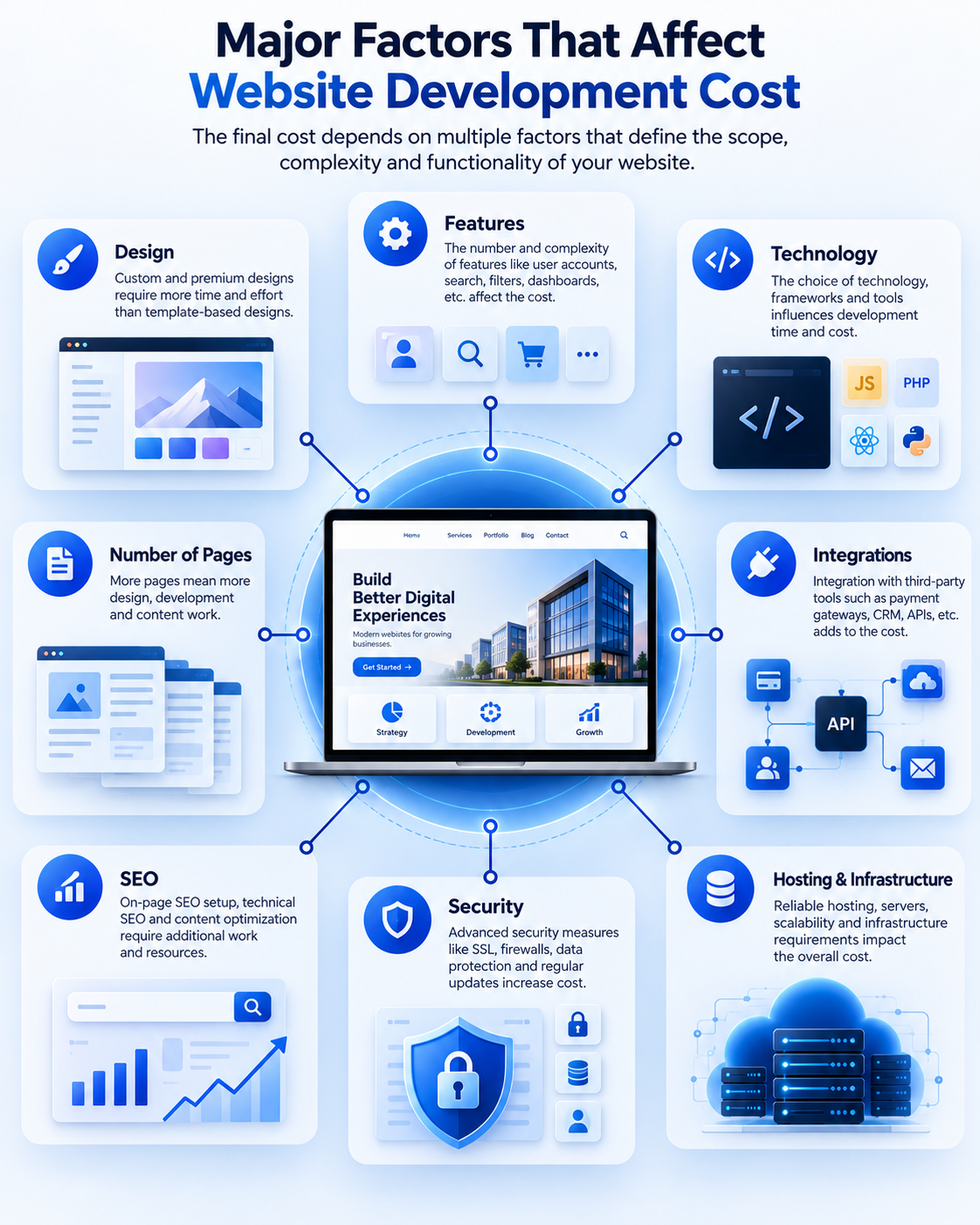
Several factors can influence the website development cost.
1. Website Design
Custom design generally requires more work than using a pre-designed template.
A custom design may include:
Brand-specific layouts
Custom graphics
UI/UX design
Interactive elements
Custom animations
Responsive layouts
A professional design should also consider usability and the customer journey.
2. Number of Pages
A five-page website and a 50-page website require different amounts of content planning, design, development, and testing.
More pages can increase development time, especially when each page requires a unique layout or functionality.
3. Features and Functionality
Features are one of the biggest factors affecting development costs.
Examples include:
User registration
Login systems
Search
Filters
Booking systems
Payment processing
Customer dashboards
Admin panels
Notifications
Reviews
File uploads
The more functionality a website requires, the more development and testing may be needed.
4. Technology
The technology used to build a website can also affect development requirements.
Depending on the project, developers may use:
Content management systems
Frontend frameworks
Backend frameworks
Databases
APIs
Cloud services
E-commerce platforms
The technology should be selected according to the project's requirements rather than simply choosing the newest option.
5. Third-Party Integrations
Many businesses need their websites to communicate with external systems.
Examples include:
Payment gateways
CRM platforms
Email marketing tools
Accounting software
Maps
Social media platforms
Analytics tools
Shipping systems
Business APIs
Each integration may require configuration, development, testing, and ongoing maintenance.
6. SEO Requirements
SEO should be considered during website development rather than added only after launch.
A website may need:
SEO-friendly URLs
Metadata
Heading structure
Internal linking
Image optimization
Mobile responsiveness
Fast loading
Search engine crawlability
Structured data where appropriate
Building a strong technical foundation can make future SEO work more effective.
7. Security
Security requirements can also influence development costs.
Depending on the website, security may involve:
HTTPS
Secure authentication
Access controls
Data protection
Form security
API security
Regular backups
Software updates
Vulnerability monitoring
Businesses that collect customer or payment information may have additional security requirements.
8. Hosting and Infrastructure
Hosting costs are separate from development in many projects.
Depending on the website, businesses may need:
Web hosting
Cloud infrastructure
Database hosting
Content delivery networks
Backup storage
SSL certificates
Monitoring
The appropriate infrastructure depends on traffic, functionality, performance requirements, and scalability.
Custom Website Development vs Template Website
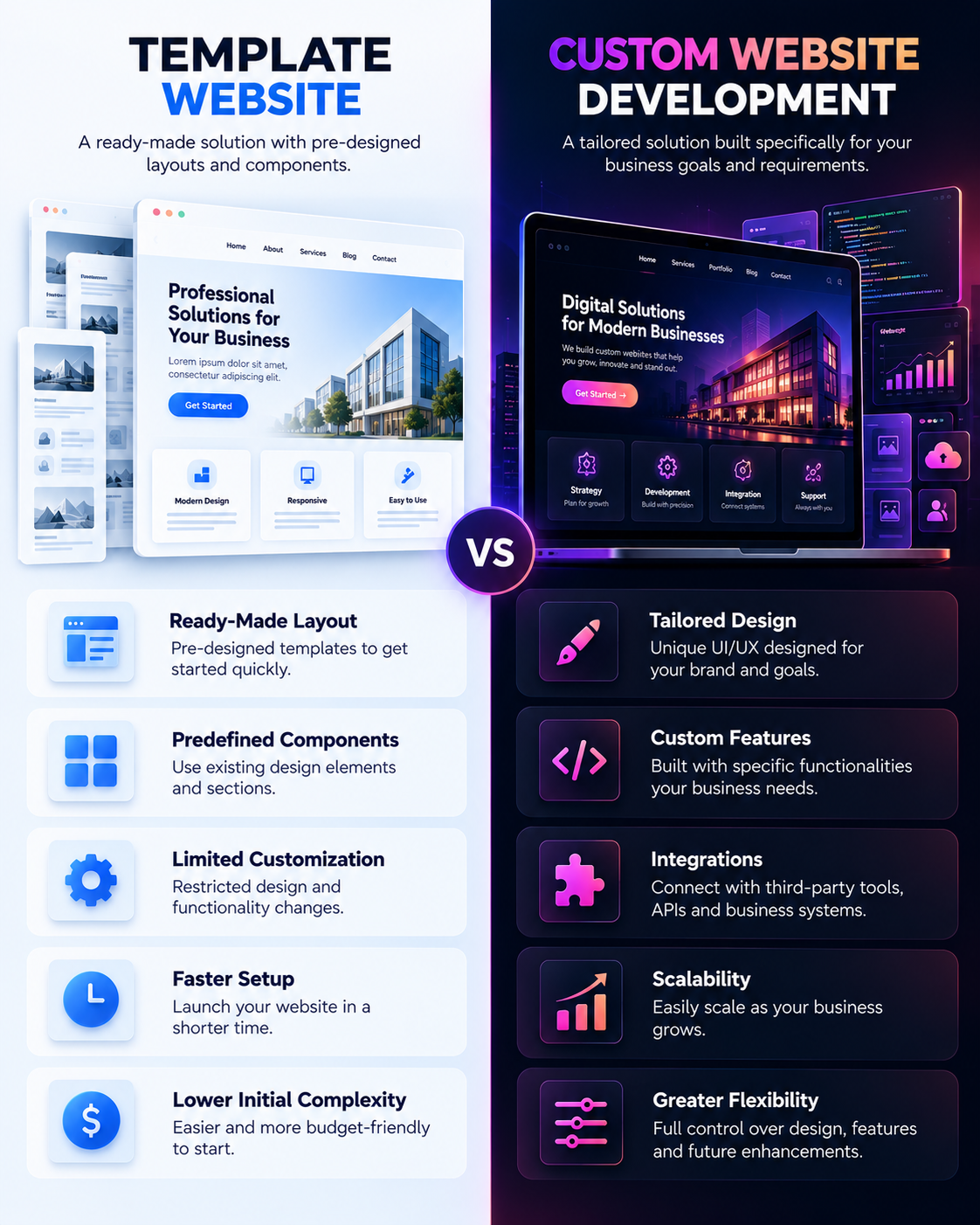
Businesses often have to decide between using a template and investing in custom development.
| Factor | Template Website | Custom Website |
|---|---|---|
| Initial development | Usually faster | Usually requires more time |
| Design | Pre-designed structure | Designed around the business |
| Customization | May have limitations | Highly customizable |
| Unique functionality | May require workarounds | Can be developed specifically |
| Scalability | Depends on platform | Generally more flexible |
| Development cost | Often lower | Usually higher |
| Long-term flexibility | Can be limited | Generally greater |
A template can be suitable for businesses with simple requirements and limited budgets.
Custom development may be more appropriate when a business needs unique functionality, advanced integrations, greater control, or long-term scalability.
The right choice depends on your goals rather than simply choosing the cheapest option.
Website Development Cost vs Website Maintenance Cost
Website development is only one part of the total cost of owning a website.
After launch, businesses may also need ongoing maintenance.
Common maintenance activities include:
Software updates
Security updates
Backups
Bug fixes
Performance optimization
Content updates
SEO improvements
New features
Hosting management
Technical monitoring
A website that is regularly maintained can remain secure, functional, and aligned with changing business requirements.
When requesting a development quote, ask whether maintenance and support are included or charged separately.
How to Reduce Website Development Costs Without Sacrificing Quality
Reducing costs does not necessarily mean choosing the cheapest developer.
Instead, businesses can control costs by planning carefully.
Define Requirements Before Development
Create a clear list of required pages, features, integrations, and functionality before development begins.
Changing major requirements during development can increase both time and cost.
Prioritize Important Features
Start with the features that are essential to your business.
Additional features can often be added later as the website grows.
Prepare Content in Advance
Providing text, images, product information, branding materials, and other content before development can help reduce delays.
Choose Technology Carefully
Use technology that matches your actual requirements.
A simple business website may not require the same technology stack as a complex web application.
Plan for Future Growth
A website should not only meet today's needs. Consider how the business may grow and whether the platform can support additional features later.
Common Mistakes When Estimating Website Development Cost
Businesses often underestimate the total cost of a website because they focus only on design and development.
Some common mistakes include:
Focusing Only on the Initial Price
The cheapest quote may not include hosting, maintenance, SEO, security, or additional functionality.
Ignoring Maintenance
Websites require updates and maintenance after launch.
Adding Features Without Planning
Adding new functionality during development can change the original scope and budget.
Choosing Technology Based Only on Price
The cheapest technology may not always be appropriate for the project's long-term requirements.
Forgetting Third-Party Costs
Payment gateways, APIs, premium plugins, hosting, and other external services may have separate costs.
Not Planning for SEO
Building a website without considering SEO can result in additional technical work later.
Questions to Ask a Web Development Company Before Getting a Quote
Before hiring a development company, ask:
What is included in the development price?
Is the design custom or template-based?
What technology will be used?
Is hosting included?
Are domain and third-party services included?
Is SEO included?
What security measures will be implemented?
Who owns the website and source code?
What support is available after launch?
How are additional features charged?
What is the estimated development timeline?
How will website maintenance be handled?
Getting clear answers to these questions can help you compare proposals more accurately.
How WebArclight Can Help
Choosing the right development partner can make a significant difference in the quality, performance, and long-term value of your website.
WebArclight provides digital solutions for businesses, including:
Website development
Custom software development
SEO and digital marketing
Cloud solutions
DevOps services
IT consulting
Our approach focuses on building websites that are:
Business-focused
Responsive
SEO-friendly
Performance-oriented
Secure
Scalable
User-friendly
Whether you need a new business website, an e-commerce platform, or a custom web application, the right development strategy can help create a stronger digital foundation for your business.
Frequently Asked Questions
How much does it cost to build a website?
There is no single price because website development costs depend on design, functionality, technology, integrations, security, SEO, and other requirements.
What is the cheapest way to build a website?
Using a template or website builder can reduce initial development costs. However, businesses should consider customization, scalability, security, maintenance, and long-term requirements before making a decision.
Is custom website development more expensive?
Custom development generally requires more design and development work than a basic template website. However, it can provide greater flexibility and allow businesses to build functionality specifically around their requirements.
What is included in website development?
Depending on the development company, a project may include design, frontend development, backend development, testing, deployment, integrations, and basic technical optimization. Always confirm what is included in the proposal.
How much does website maintenance cost?
Maintenance costs vary depending on the website's technology, size, traffic, security requirements, hosting, and level of support required.
Should SEO be included in website development?
Yes. Basic technical SEO should ideally be considered during development. This can help establish a stronger foundation for future search engine optimization.
How long does it take to build a website?
A simple website can take several weeks, while larger websites, e-commerce platforms, and custom web applications can take considerably longer. The timeline depends on project requirements, content, design, development, testing, and revisions.
Conclusion
The website development cost for a business depends on much more than the number of pages or the visual design.
Features, technology, integrations, SEO, security, hosting, maintenance, and scalability can all affect the total investment.
Before choosing a development company, clearly define your requirements, compare proposals, understand what is included, and consider the long-term needs of your business.
A well-developed website should not simply fit your current budget. It should provide value to your customers and support your business as it grows.
Get the Right Website for Your Business
Planning a new website or upgrading an existing one?
Talk to WebArclight (https://webarclight.com/) about your website development requirements and get a solution designed around your business goals.
https://webarclight.com/
Comments
No Comments Yet
Be the first to share your thoughts!