
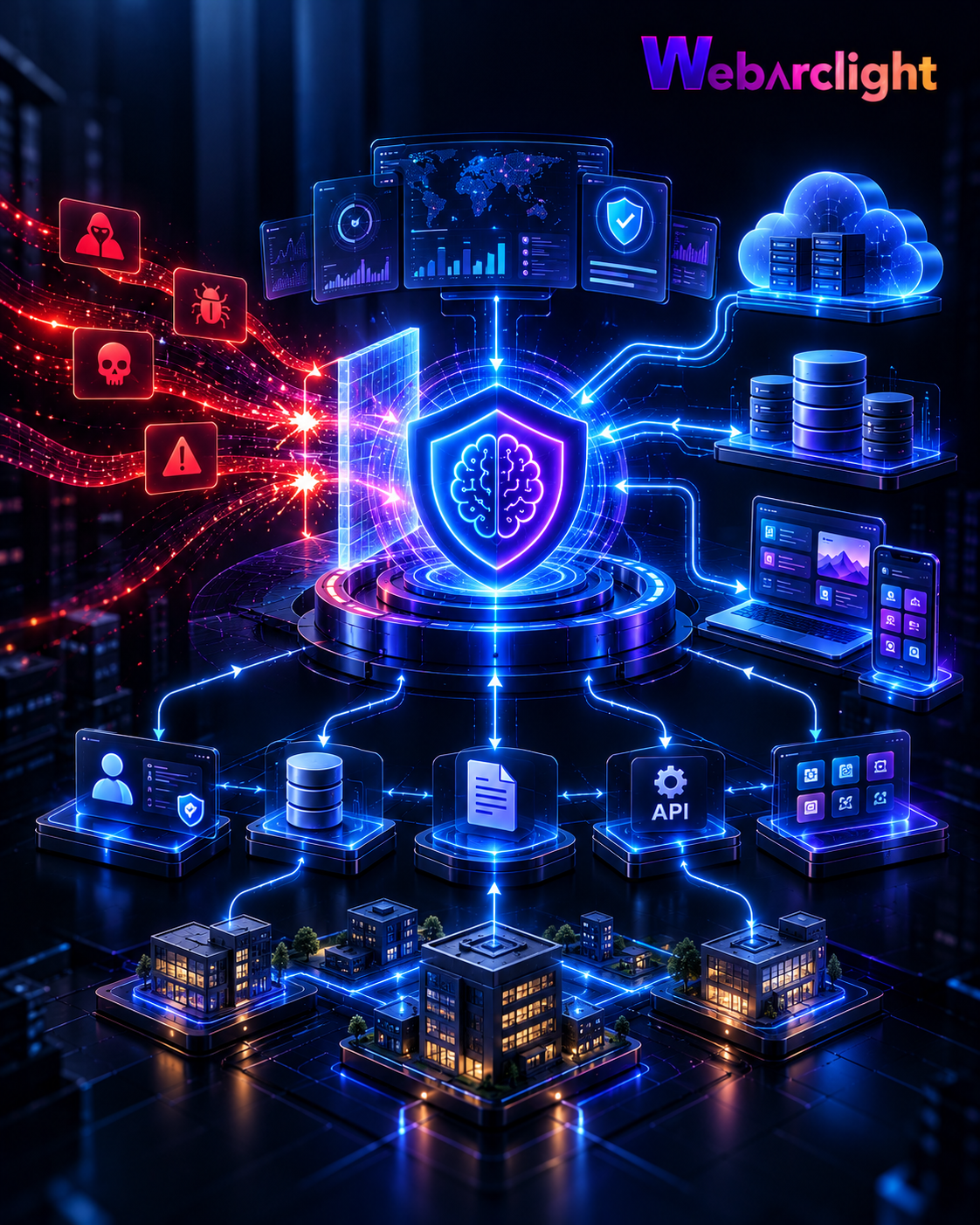
Cybersecurity is becoming more complex as businesses adopt cloud platforms, AI applications, remote work, digital services, and connected systems. At the same time, cyber threats are becoming faster and more sophisticated.
Artificial intelligence is changing this landscape by helping businesses detect threats, analyze security data, respond to incidents, and protect digital environments more efficiently. However, AI also introduces new security risks that businesses need to understand.
1. AI-Powered Threat Detection
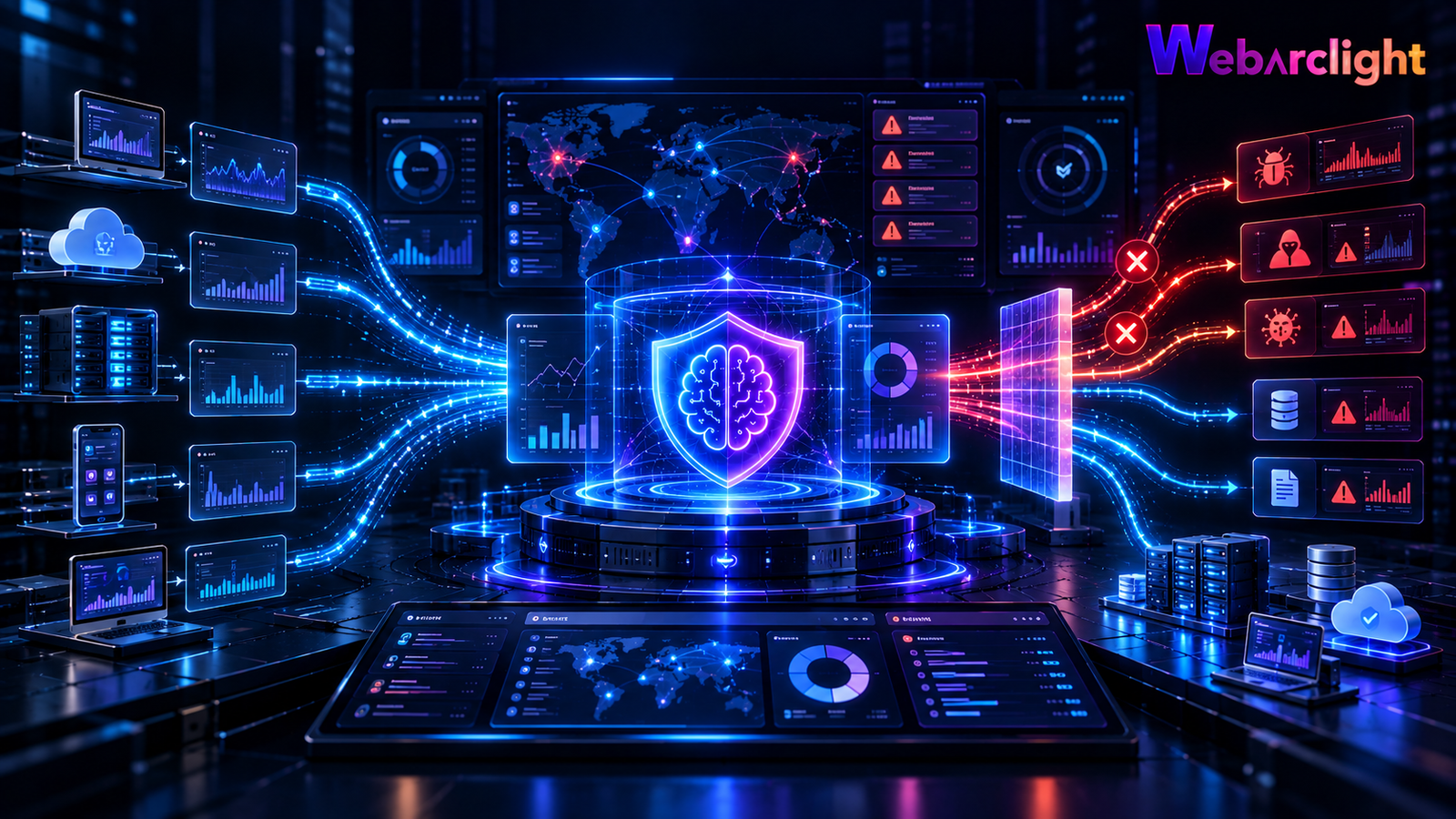
Traditional security systems often rely on predefined rules and known threat patterns. AI can analyze large volumes of security data and identify unusual behavior that may indicate a potential threat.
For example, AI can help detect unusual login activity, suspicious network behavior, unexpected changes in systems, or patterns associated with malware and phishing attacks.
This allows security teams to identify potential threats earlier and investigate them more efficiently.
2. Faster Incident Response
When a security alert occurs, teams often need to examine logs, user activity, network events, and system information before deciding how to respond.
AI can help analyze this information quickly, prioritize alerts, summarize incidents, and support security teams during investigation and response.
Instead of spending time manually reviewing every alert, security professionals can focus their attention on the incidents that require the most attention.
3. AI and Phishing Protection
Phishing remains an important business security concern, and AI is changing how both attackers and defenders approach it.
AI can help identify suspicious emails, unusual communication patterns, malicious links, and other indicators of social engineering.
At the same time, attackers can use AI to create more convincing messages and automate social-engineering campaigns. This makes employee awareness, strong authentication, and effective email security increasingly important.
4. AI for Vulnerability Management
Businesses operate many applications, servers, cloud services, APIs, and third-party technologies. Identifying which vulnerabilities require immediate attention can be difficult.
AI can help security teams analyze vulnerabilities, understand potential risks, prioritize remediation, and identify patterns across large technology environments.
This can help organizations move from simply finding vulnerabilities to focusing resources on the risks that could have the greatest business impact.
5. Protecting Data in AI Systems
AI systems often work with large amounts of business information. This can include customer data, documents, financial information, internal communications, and other sensitive content.
Poorly controlled AI usage can create risks such as accidental data exposure or unauthorized access.
Businesses therefore need clear policies for what information can be used with AI systems, along with access controls, data protection, monitoring, and secure AI implementation.
6. AI Agents Create New Security Challenges
The growth of AI agents introduces another layer of cybersecurity considerations.
Unlike a simple chatbot, an AI agent may be able to access business applications, retrieve information, use APIs, and perform actions on behalf of users.
This means businesses need to consider what an AI agent can access, what actions it can perform, and how those actions are monitored.
Unmanaged or unauthorized AI agents can create additional attack surfaces, making AI inventory, identity management, permissions, logging, and governance increasingly important.
7. Identity and Access Management
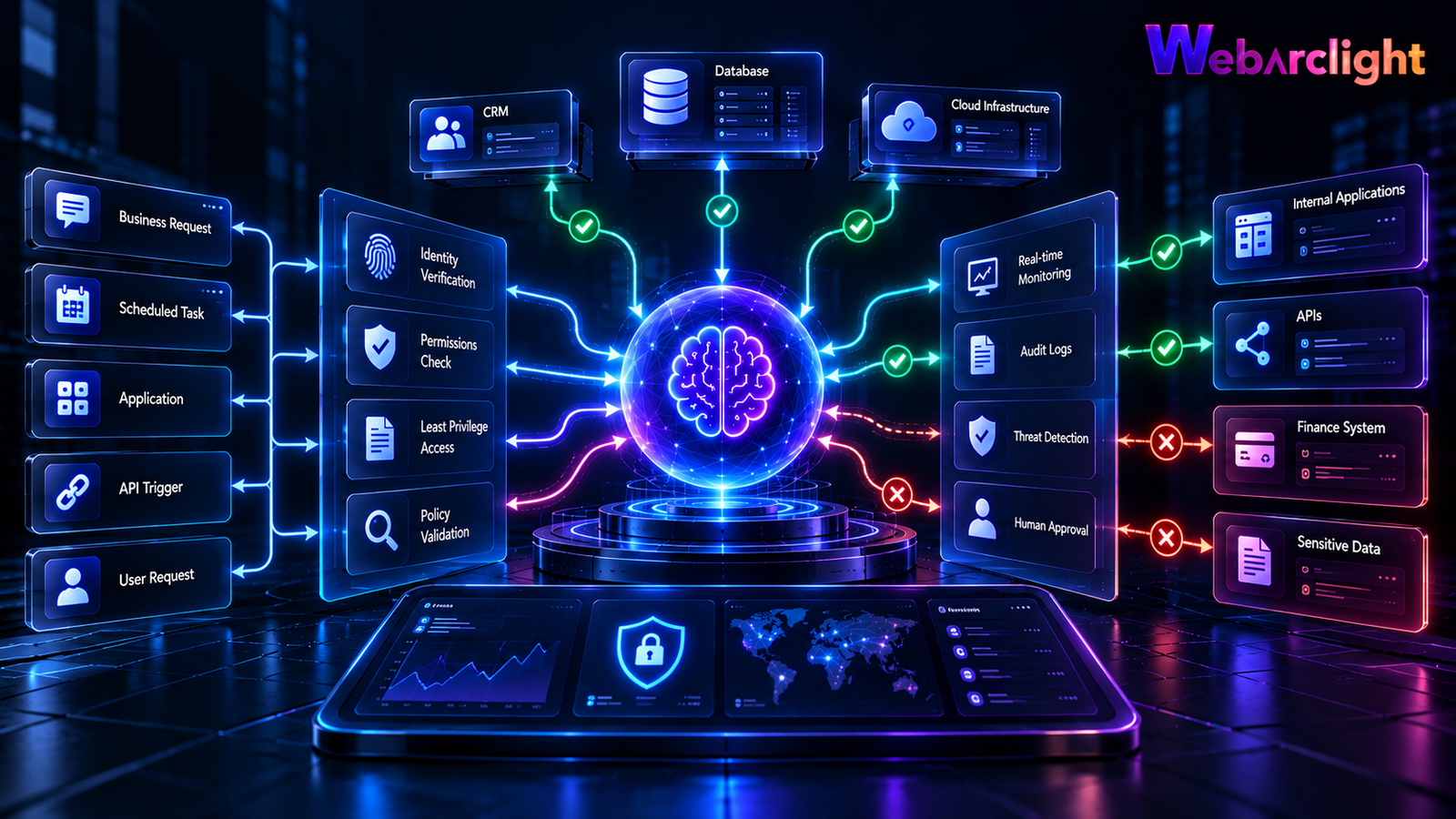
As businesses introduce AI systems and agents, traditional identity and access controls need to account for more than just human users.
Employees, applications, services, and AI agents may all interact with business systems.
Organizations should follow principles such as least-privilege access, strong authentication, controlled permissions, activity monitoring, and regular access reviews. Gartner specifically identifies identity and access management for AI agents as an emerging cybersecurity priority.
8. AI-Powered Security Operations
Security teams receive large numbers of alerts every day. AI can assist security operations by helping with alert triage, investigation, threat analysis, and repetitive security tasks.
This does not mean removing security professionals from the process. Instead, AI can reduce repetitive work and help teams spend more time on complex investigations and strategic security decisions.
9. AI Needs Governance and Human Oversight
AI should not be deployed into security environments without appropriate controls.
Businesses need to understand which AI tools are being used, what data they can access, what actions they can perform, and how their outputs are validated.
Regular security assessments, monitoring, clear policies, and human oversight can help reduce the risks associated with AI adoption. The World Economic Forum also emphasizes governance and balanced human oversight when organizations deploy AI for cybersecurity.
Building a Smarter Cybersecurity Strategy
AI can make cybersecurity faster and more intelligent, but it is not a replacement for a strong security foundation.
Businesses still need secure cloud infrastructure, identity and access management, data protection, software updates, backups, employee awareness, network security, and continuous monitoring.
The most effective approach is to combine these fundamentals with AI-powered security capabilities.
The Future of AI and Cybersecurity
AI is becoming an important part of modern cybersecurity. It can help businesses detect threats faster, analyze large amounts of information, automate repetitive security tasks, and improve incident response.
At the same time, organizations must address the risks that come with AI adoption, particularly around data protection, identity, AI agents, access control, and governance.
Businesses that combine AI innovation with strong cybersecurity practices will be better positioned to build secure, resilient, and scalable digital operations.
WebArclight helps businesses build and improve secure digital solutions across AI, cloud, cybersecurity, and modern software environments.
https://webarclight.com/
Comments
No Comments Yet
Be the first to share your thoughts!