
AI-Native Cloud: What It Means for Modern Businesses
Cloud computing has become an essential part of modern business technology. Companies use cloud platforms to host applications, store data, run business systems, and scale their digital operations.
But the role of the cloud is changing.
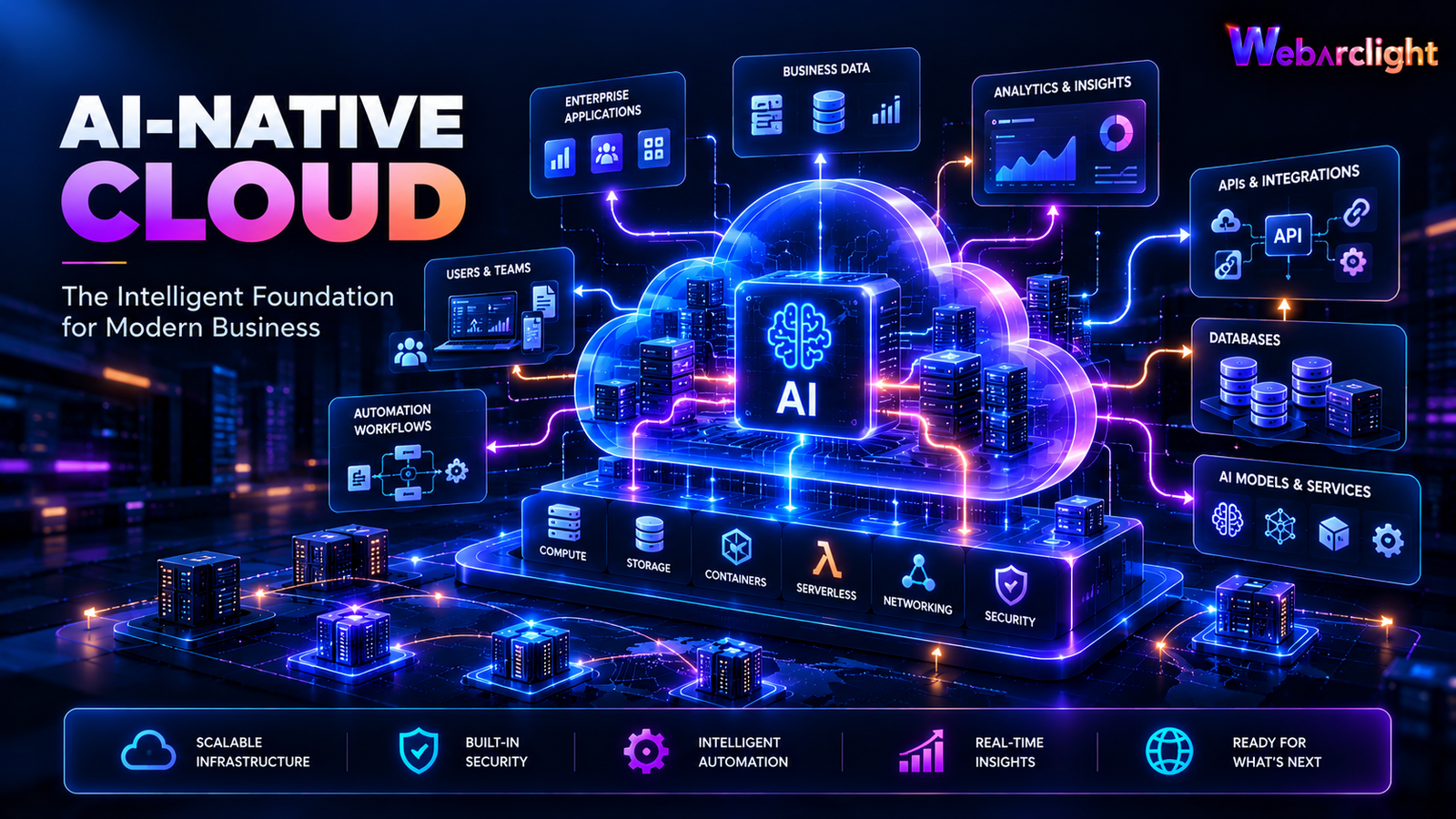
With the rapid growth of artificial intelligence, businesses are moving beyond simply running applications in the cloud. They are building AI-native cloud environments where applications, data, infrastructure, automation, and AI capabilities work together.
So, what exactly is an AI-native cloud, and why does it matter for modern businesses?
What Is an AI-Native Cloud?
An AI-native cloud is a cloud environment designed to support artificial intelligence as a core part of business applications and operations.
Traditional cloud environments mainly focus on providing computing, storage, networking, and application infrastructure.
AI-native cloud environments go further by integrating capabilities such as:
Artificial intelligence and machine learning
Generative AI
AI agents
Intelligent data platforms
Automated workflows
Scalable computing infrastructure
Real-time analytics
AI-powered security and monitoring
Instead of treating AI as an additional feature, businesses can make AI part of the way their applications and processes operate.
Why Businesses Are Moving Toward AI-Native Cloud
AI applications can have very different infrastructure requirements compared with traditional software.
An AI application may need to process large amounts of data, connect with multiple systems, interact with users in real time, and scale computing resources depending on demand.
Cloud platforms provide the flexibility needed to support these workloads.
For businesses, this can make it easier to experiment with AI, deploy AI-powered applications, and scale successful solutions without building all infrastructure from scratch.
1. AI Becomes Part of Business Applications
AI-native cloud environments allow businesses to integrate intelligence directly into their applications.
For example, a customer service platform could use AI to understand customer requests, retrieve relevant information, generate responses, and update records.
Similarly, an internal business application could analyze documents, summarize information, identify patterns, or assist employees with routine tasks.
This changes applications from simply processing information to helping users make decisions and complete tasks.
2. AI Agents Need Cloud Infrastructure
The growth of AI agents is another important reason for the evolution toward AI-native cloud environments.
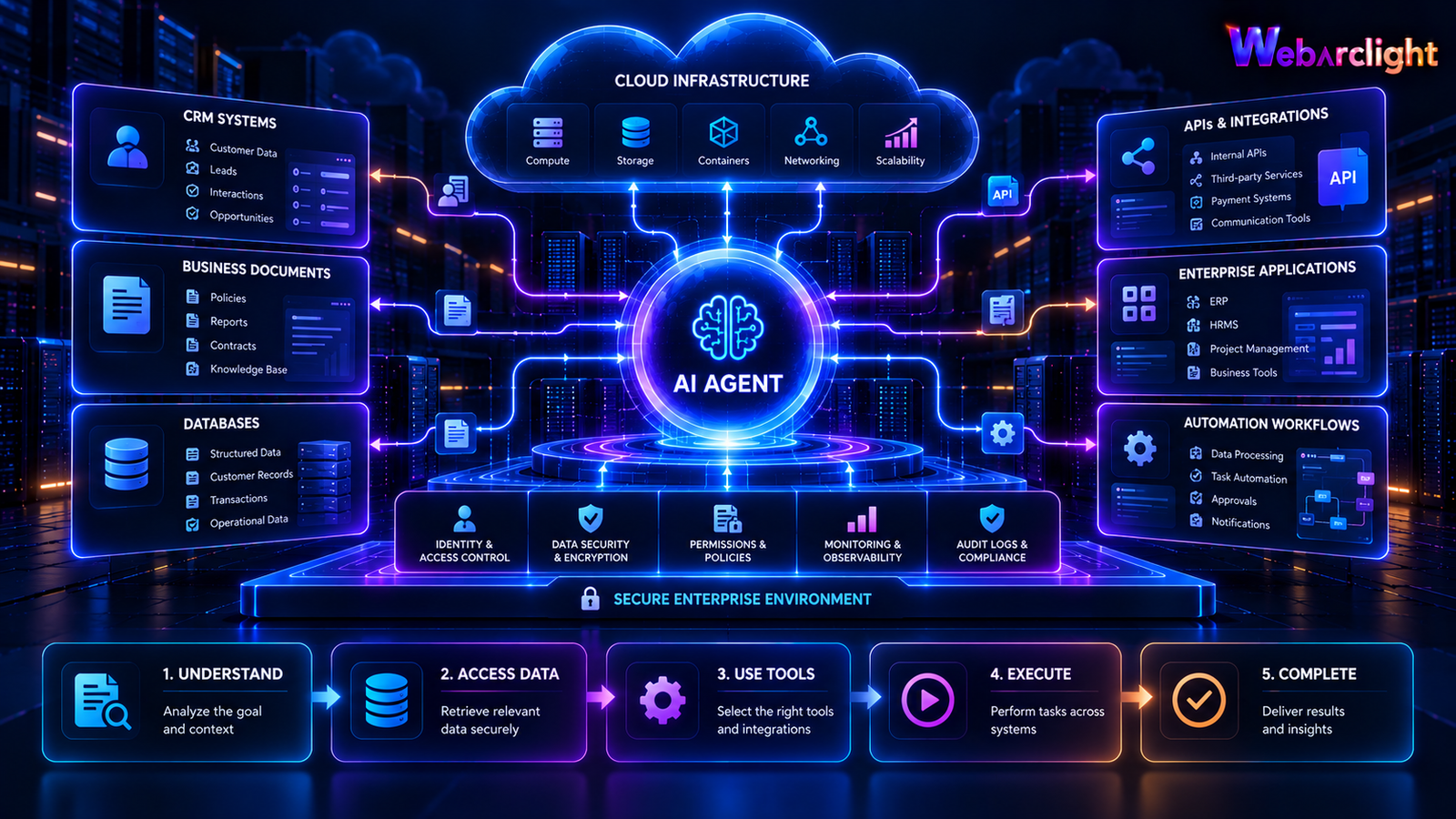
Unlike traditional automation, AI agents can understand goals, use tools, access information, and perform multiple steps to complete a task.
For example, an AI agent could receive a customer request, check information in a CRM system, retrieve relevant documents, prepare a response, and update the appropriate business record.
These workflows require reliable access to applications, APIs, databases, identity systems, and business data.
Cloud infrastructure provides the foundation for connecting these components while allowing businesses to scale their AI workloads.
3. Data Becomes More Important
AI is only as useful as the data it can access.
Modern businesses have information spread across databases, cloud storage, applications, documents, customer systems, and internal platforms.
An AI-native cloud approach focuses on connecting these data sources securely so AI applications can use relevant business information.
This can support use cases such as:
Intelligent search
Document analysis
Customer insights
Business analytics
Knowledge assistants
Personalized recommendations
AI-powered decision support
The goal is not simply to put more data into the cloud, but to make business data more accessible and useful for intelligent applications.
4. Cloud Infrastructure Can Scale With AI Workloads
AI workloads can change significantly depending on demand.
A business may have limited AI usage during normal working hours but experience a significant increase in requests during a product launch or marketing campaign.
Cloud infrastructure allows computing resources to scale according to workload requirements.
This flexibility can help businesses avoid maintaining large amounts of infrastructure that remain underused while still supporting periods of higher demand.
5. Automation Becomes More Intelligent
Traditional cloud automation can handle tasks such as deployments, backups, resource management, and infrastructure provisioning.
AI can add another layer of intelligence.
For example, AI-powered systems can help identify unusual behavior, analyze operational data, recommend improvements, or assist teams in troubleshooting infrastructure problems.
This creates a shift from simply automating predefined tasks toward systems that can analyze situations and assist with decisions.
6. Security Must Be Built Into AI-Native Cloud
AI-native environments also introduce new security considerations.
AI applications and agents may need access to sensitive business information, APIs, databases, and internal systems.
That makes identity and access control extremely important.
Businesses need to consider:
Who can access AI systems?
What data can an AI application access?
Which actions can an AI agent perform?
How are AI activities monitored?
How are sensitive data and credentials protected?
When should human approval be required?
Strong authentication, authorization, encryption, monitoring, logging, and governance should therefore be part of the architecture from the beginning.
7. AI-Native Does Not Mean Rebuilding Everything
Moving toward an AI-native cloud does not necessarily mean replacing existing systems.
Most businesses already have applications, databases, cloud services, and established workflows.
Instead of replacing everything, businesses can gradually introduce AI capabilities where they provide measurable value.
For example, a company could start with:
Existing application → AI-powered feature → Connected business data → Automated workflow → AI agent
This incremental approach allows businesses to experiment, measure results, and expand successful use cases over time.
What Can Businesses Build With an AI-Native Cloud?
AI-native cloud environments can support a wide range of applications, including:
AI-powered customer support
Intelligent document processing
Enterprise knowledge assistants
AI-powered analytics
Recommendation systems
Intelligent search
AI agents for business operations
Automated reporting
Predictive applications
AI-powered cybersecurity
Personalized digital experiences
The exact implementation depends on the business problem, available data, existing technology, and security requirements.
The Future of Cloud Is Becoming More Intelligent
Cloud computing is evolving from infrastructure that simply hosts applications into an intelligent foundation for modern digital businesses.
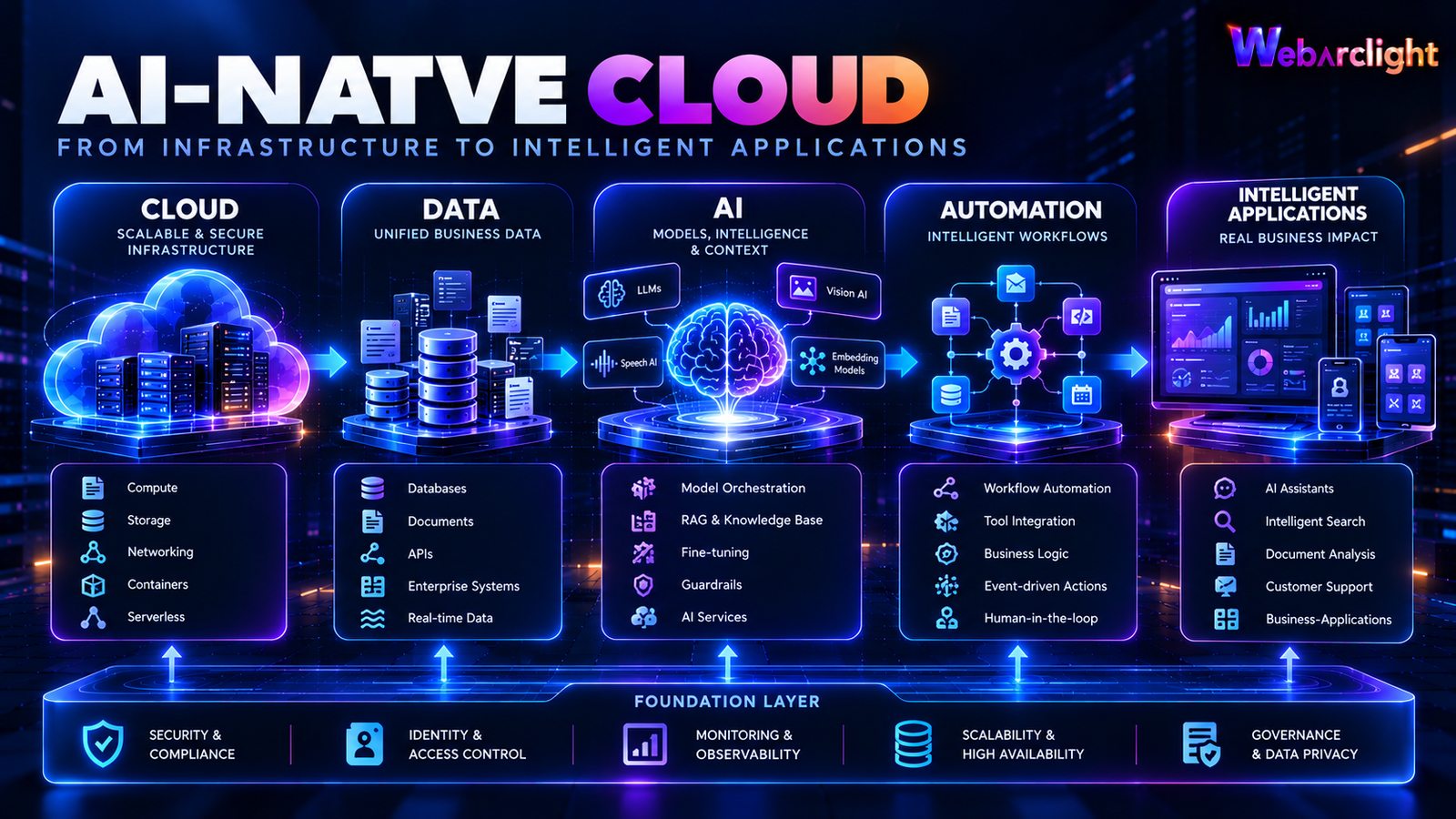
AI, automation, data, cloud infrastructure, and security are increasingly becoming interconnected.
Businesses that understand this shift can use cloud technology not only to reduce infrastructure complexity but also to create smarter applications and more efficient operations.
The goal should not be to adopt AI simply because it is a trend. Instead, businesses should identify where AI can solve real problems and then build the right cloud foundation to support those solutions.
Conclusion
The AI-native cloud represents the next stage of cloud evolution.
It combines scalable infrastructure, business data, AI capabilities, automation, security, and intelligent applications into a connected technology environment.
For modern businesses, this can create opportunities to improve customer experiences, automate operations, make better use of data, and build new digital products.
The businesses that approach AI and cloud together — rather than treating them as separate technologies — can create a stronger foundation for future digital growth.
WebArclight helps businesses explore modern cloud, AI, automation, software, and digital solutions designed around real business requirements.
https://webarclight.com/
Comments
site is genuinely fastidious and the visitors are actually sharing pleasant thoughts.
My blog - <a href="https://www.trustpilot.com/review/softprowatersystems.com">https://www.trustpilot.com/review/softprowatersystems.com</a>
Also visit my homepage; Premium Selections (<a href="https://freshcannaofficial.Blogspot.com/">freshcannaofficial.Blogspot.com</a>)