

How AI Agents Are Changing Business Automation
Artificial intelligence is moving beyond chatbots and simple question-and-answer tools. A new generation of AI systems, known as agentic AI, is designed to understand goals, plan tasks, use tools, and complete multiple steps with limited human intervention.
This shift is becoming an important technology trend in 2026. Gartner has identified multiagent systems as one of its strategic technology trends, while McKinsey describes agentic AI as a move toward systems that can execute end-to-end digital tasks.
What Is Agentic AI?
Traditional AI generally responds to a specific instruction.
For example, a user might ask an AI assistant to summarize a document, write an email, or analyze some data.
Agentic AI goes further.
An AI agent can receive a goal, break it into smaller tasks, use connected tools or applications, evaluate the results, and continue working toward the objective.
For a business, this could mean an AI agent that receives a customer request, checks relevant information, updates a CRM, prepares a response, and notifies the appropriate employee.
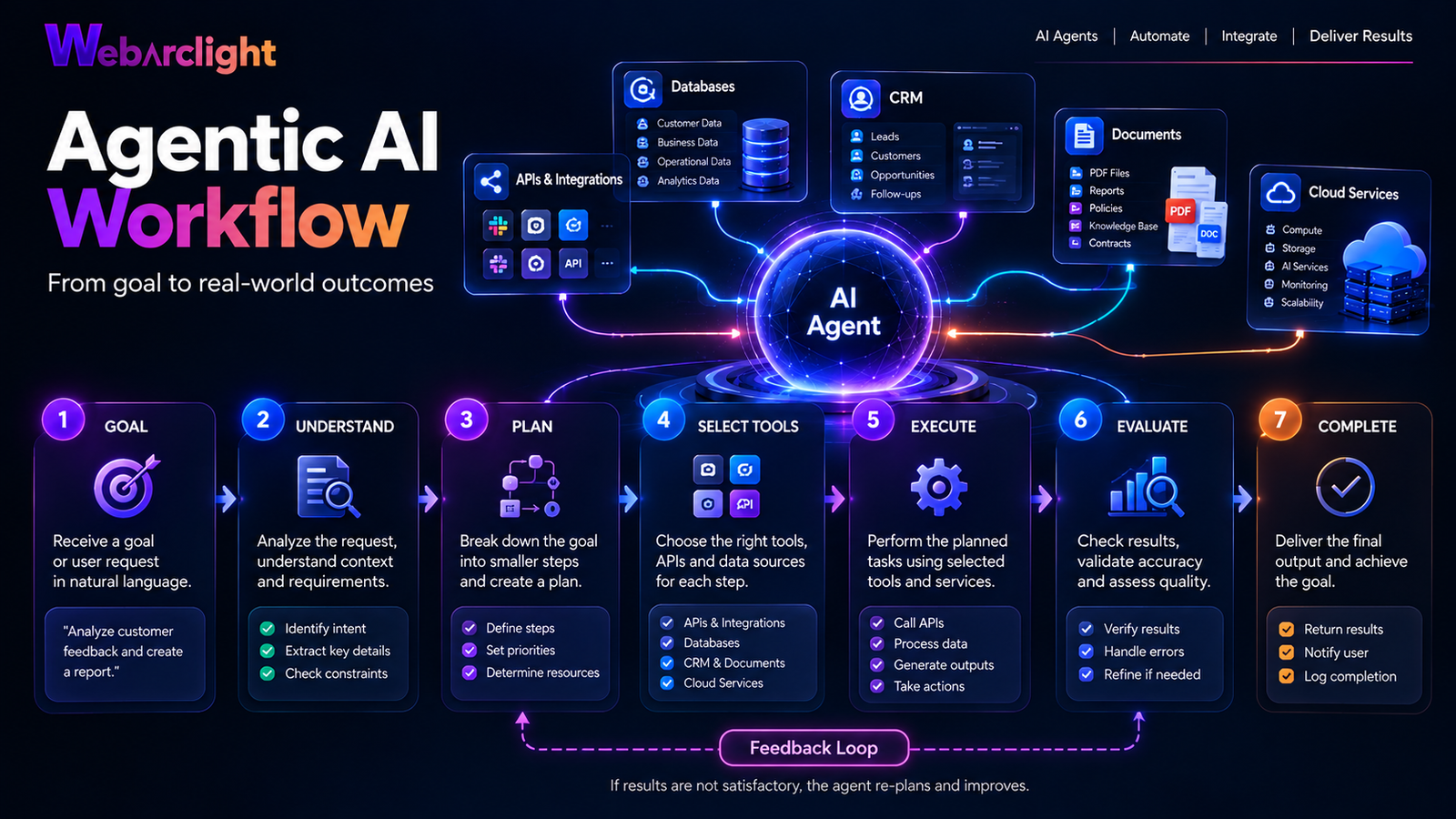
How Businesses Can Use AI Agents
Agentic AI can support many business processes, including:
Customer support: Classifying requests and handling routine queries.
Sales: Qualifying leads and updating CRM records.
Operations: Coordinating repetitive workflows between different systems.
Document processing: Extracting information and organizing documents.
Software development: Assisting with coding, testing, debugging, and documentation.
Data analysis: Collecting information and generating business reports.
The biggest opportunity is not simply replacing individual tasks. It is connecting multiple tasks into a single intelligent workflow.
Agentic AI vs Traditional Automation
Traditional automation normally follows predefined rules.
If X happens → perform Y.
Agentic AI can work with more flexibility. It can interpret information, decide which action should happen next, and interact with different tools depending on the situation.
This makes agentic AI particularly useful for processes where every request may be slightly different.
However, traditional automation still has an important role. A strong business solution may combine AI agents, APIs, databases, cloud services, and rule-based automation rather than relying on AI alone.
Why AI Agents Need Security and Governance
Greater autonomy also creates new risks.
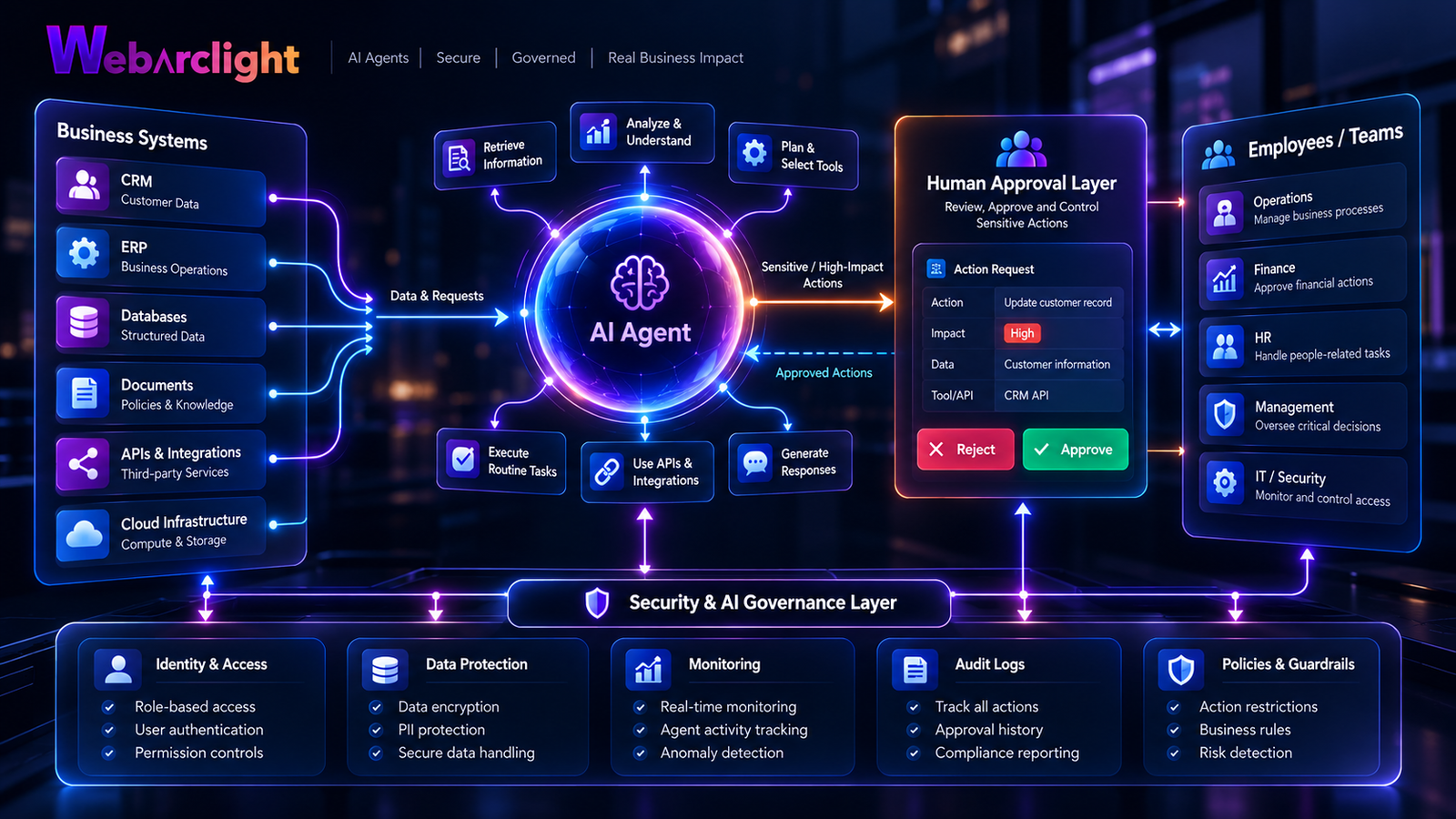
AI agents may have access to business data, applications, APIs, and other systems. Gartner warns that organizations are increasingly facing risks from AI agents created or used without proper oversight.
Businesses therefore need to consider:
What information can an AI agent access?
Which actions is it allowed to perform?
How are its activities monitored?
When should a human approve an action?
How are sensitive business and customer data protected?
Security should be part of the design from the beginning rather than added after deployment.
The Future of Business Automation
Agentic AI is changing the idea of business automation from simply automating tasks to automating workflows.
As AI agents become better at using software, APIs, databases, and business systems, organizations can create more connected digital operations.
The businesses that benefit most will not necessarily be those using the most AI. They will be the ones identifying the right processes and applying AI where it can deliver measurable improvements.
WebArclight helps businesses explore AI, automation, custom software, cloud solutions, and intelligent digital systems designed around real business requirements.
Agentic AI is still evolving, but its direction is clear: AI is moving from simply providing answers toward helping businesses plan, act, and automate.
https://webarclight.com/
Comments
No Comments Yet
Be the first to share your thoughts!